
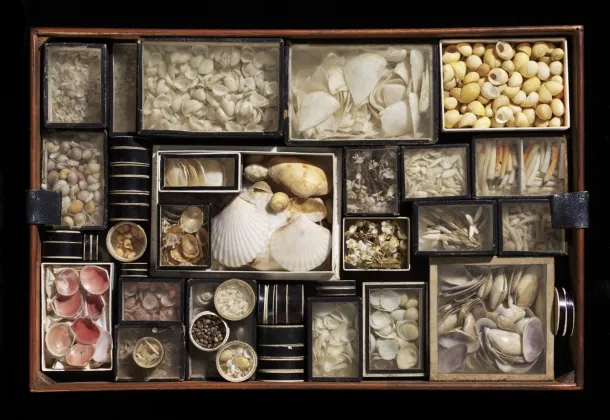
Why the Shell Motif Never Goes Out
Wedgwood's designers returned to the shell for well over a century, in dessert sets, tiles and plates. Their sketches offer a lesson in how one small motif can finish a look.
A good accessory often comes down to one small, repeatable detail. For Wedgwood's designers, that detail was the shell.
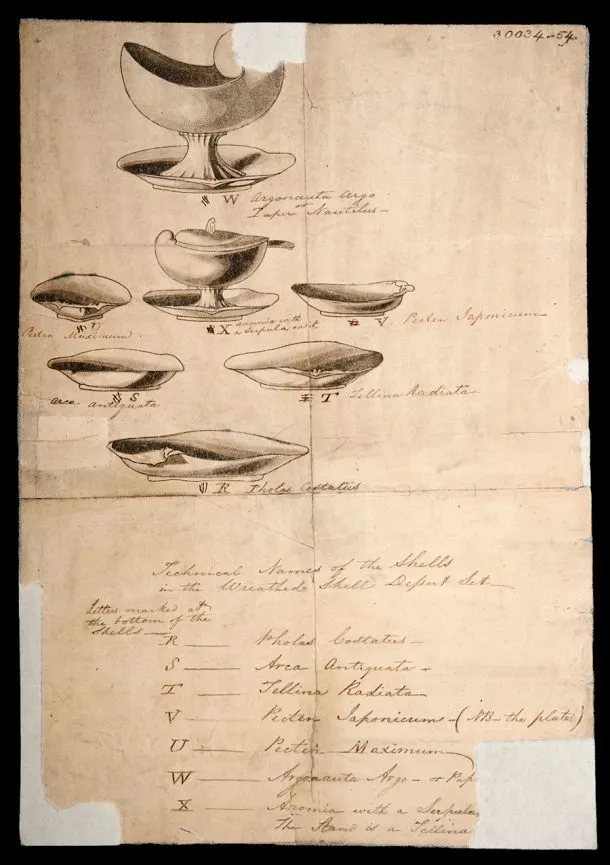
The archive shows it plainly. Sketches and ware from the late 18th century include the Argonauta Argo, better known as the Paper Nautilus, and it stayed a popular shape right through to the 20th century. A shape that survives that long has usually earned its place.
A motif with admirers
Shells were fashionable at the highest level. The Husk Service, a complete dinner and dessert service made in 1770, was ordered by Empress Catherine II of Russia, who was known to be a shell enthusiast. A collector's enthusiasm is often what turns a decorative idea into a lasting one.
From dessert table to tile
The shell did not stay on one kind of object. It appears several times in the tile pattern books too, and tile production continued until 1902, when the tile department at Etruria closed because the tile industry was in decline. Etruria was Wedgwood's factory from 1769 to 1950.
The designs also travelled between materials. Some of the shell tile patterns were printed onto other kinds of ware, including a scallop shell-shaped plate in bone china from the late 19th century.
What to take from it
The lesson for anyone who dresses with care is that a motif works best when it adapts. The same shell changed shape and surface across different objects without losing its identity.
You can apply that to your own accessories. A scallop-edged dish by the door for your rings, a shell-shaped clasp or a single shell-inspired piece among plainer things will do more than a pile of themed items. Choose one, let it repeat quietly, and keep everything around it simple.
The Wedgwood record suggests that the shell works because it is simple, familiar and easy to reinterpret. It was worth returning to for more than a hundred years.

Gemma is a former prop stylist turned fashion columnist from Los Angeles. She focuses on the transformative power of small details, showing how belts, scarves, bags, and jewelry can elevate an everyday outfit into a standout look.
All articles by Gemma Hayes
Comments (0)