
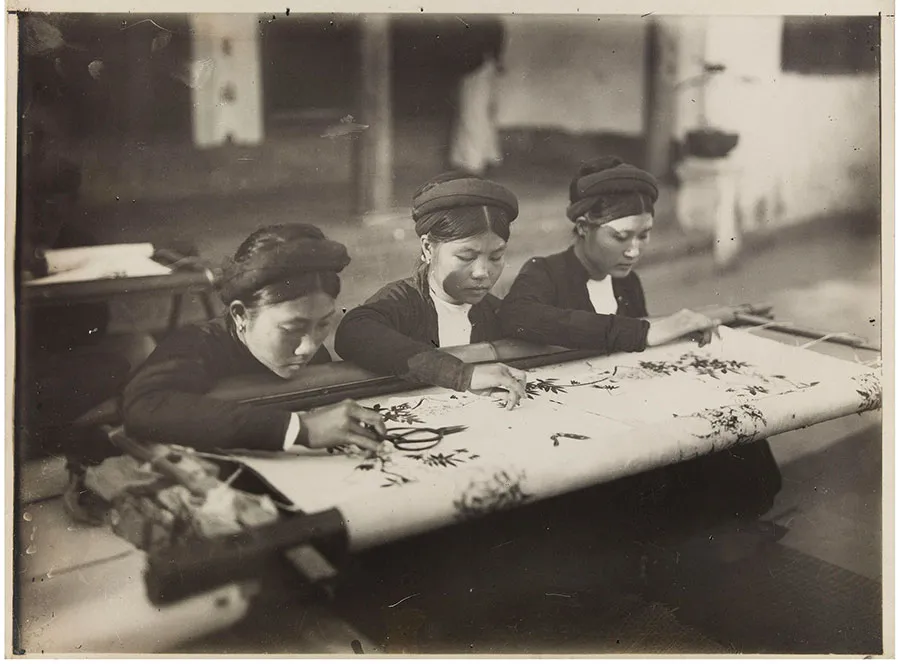
Vietnamese Embroidery and the Art of Detail
Vietnamese silk embroidery was made to charm customers far from home. Its dragons, satin grounds and swatch-style design books still show what a finishing touch can do.
Embroidery is the detail that turns a plain object into something you remember. Vietnam has a long tradition of it, and one chapter is especially revealing for anyone who loves a beautifully finished accessory: the years when its workshops began stitching for customers overseas.
Made for a distant customer
During the French colonial period, embroidery workshops in places such as Bắc Ninh and Nam Định increasingly made textiles for international markets. They were responding to the tastes of European and American buyers, and that shaped what they made: finished, decorative pieces designed to be chosen, ordered and displayed.
A surviving design book shows how this worked. It was probably not a pattern book for the embroiderers themselves. It was more likely a catalogue, a way for customers to pick designs and fabrics when ordering finished products. Think of it as an early version of choosing your own monogram, colour and material.
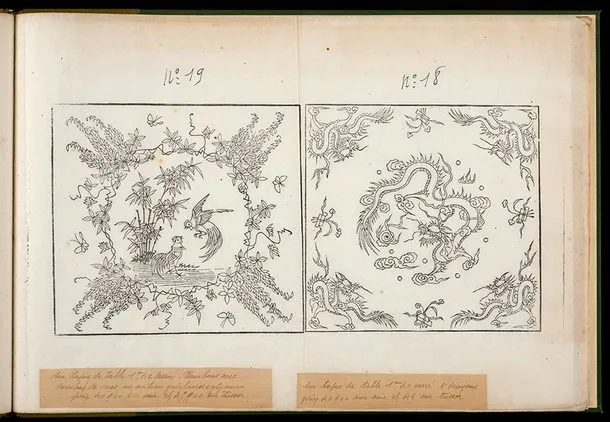
Dragons on satin
The finished objects tell the story just as clearly. Two cushion covers made in Vietnam between 1900 and 1920 pair embroidery with silk satin that was probably produced in Lyon. That detail points to a link between French textile production and Vietnamese embroidery workshops: imported fabric, local skill.
One cover is worked with a dragon. The other is cream satin, a quieter ground that lets the stitching do the talking.
The studio behind this commercial work was recognised well beyond Vietnam. It took part in the Universal Exposition in St Louis in 1904, won a gold medal at the Marseille Colonial Exhibition in 1906 and a silver medal at the Shanghai Exhibition in 1912.
What to take from it
The lesson for your own wardrobe and home is simple. Embroidery works hardest on a smooth, light-catching surface, and satin is the classic example. A single embroidered piece, whether a cushion, a scarf or a bag panel, can carry a whole room or outfit. Let one detailed object lead and keep what surrounds it calm. Look closely at the stitching, too. The best embroidery rewards a second glance, and these century-old covers still do.

Ethan is a bespoke menswear consultant based in Toronto. He focuses on smart-casual dressing, proper garment fit, and blending timeless tailoring with contemporary street style accessories.
All articles by Ethan Blake
Comments (0)